












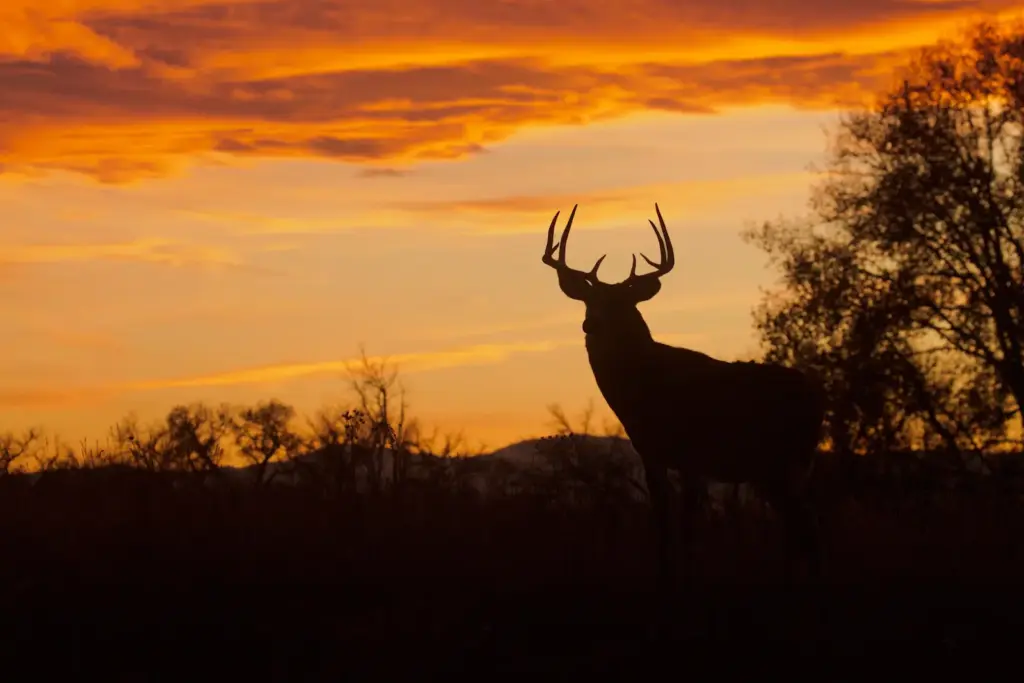
Everyone knows deer are active at dawn and dusk. Fewer people know exactly why deer vision is so much better suited to that light than ours — and the anatomy behind it explains a lot more than just “good night vision.” It shapes how deer scan a treeline, how they react to movement, and why a flashlight beam doesn’t send them bolting the way you’d expect.
This page covers the physical structure of a deer’s eye. For how UV brighteners in fabric and detergent interact with that structure — and what to do about it — see [Can Deer Really See UV?] and [How to Check Your Hunting Gear for UV Brighteners].
Rods vs. Cones: A Different Ratio Entirely
Every mammal eye uses two types of light-sensing cells: rods, which handle low-light and motion detection, and cones, which handle color and fine detail in bright light. The ratio between them is where deer and humans diverge sharply.
In the human eye, cones dominate — especially in the fovea, the small central patch we rely on for sharp focus, which contains cones almost exclusively and no rods at all. That’s why staring directly at a faint star in the night sky can make it seem to disappear: the exact center of your vision is the part least equipped to see dim light.
Deer are built the opposite way. Rods make up the large majority of their photoreceptors, spread across a horizontal band called the macula rather than concentrated in one central point. The practical effect is almost counterintuitive: deer actually resolve more detail in low light than in bright daylight, because that’s where their receptor advantage is. Humans, with our cone-heavy fovea, are the ones built for a sunny afternoon.
No “Sweet Spot,” But a Wider View
Because human detail vision is concentrated in the small foveal area, we effectively point our eyes at whatever we want to examine closely. Deer don’t work that way — their receptors are spread along that horizontal band, giving them a wide field of usable detail across roughly 300 degrees rather than a narrow zone of sharp focus surrounded by blur.
That wide, evenly-sensitive field is also why deer are so good at picking up movement at the edge of their vision. Where a human might catch motion in their peripheral vision but need to turn and look directly at it to identify what moved, a deer’s visual field gives them detail across a much broader arc without needing to reorient.
The Reflective Layer Behind the Retina
Deer, like many nocturnal and crepuscular animals, have a reflective structure behind the retina called a tapetum lucidum. It’s what causes “eye shine” when a light hits an animal’s eyes at night. Functionally, it gives light a second pass through the photoreceptors — any light that wasn’t absorbed the first time gets bounced back for another chance at triggering a rod or cone.
Humans lack this structure entirely. Behind our retina is a light-absorbing layer that does the opposite job: it soaks up stray light to keep the image sharp, trading sensitivity for clarity. It’s a reasonable trade for a species that does most of its important seeing in daylight — much less useful for one that needs to navigate a dark treeline at 5:45am.
A Slit, Not a Circle
The shape of a deer’s pupil matters as much as its size. Deer close their eyes to a horizontal slit rather than the round aperture humans use. Combined with their horizontally-oriented band of receptors, this shape supports that wide field of vision across a large range of light levels, and lets deer adjust light intake almost instantly by moving their eyelids — no waiting on a pupil to physically dilate or contract the way ours does.
That’s also a plausible piece of why deer don’t always react to a flashlight beam the way people expect. Rather than needing to turn away and let their eyes readjust in the dark like we do, the working theory is that a deer may be able to keep functioning with the receptors outside the beam’s path, while only the directly-lit portion of the retina is temporarily overwhelmed.
Wiring: Sensitivity Over Sharpness
One more structural difference is easy to miss: how photoreceptors connect to the nerves that carry their signal to the brain. In humans, each receptor generally has something close to its own dedicated nerve connection, which supports fine detail. In deer, multiple receptors often feed into a shared nerve pathway — a wiring choice that sacrifices some sharpness but increases sensitivity, particularly to motion. It’s a small piece of anatomy, but it lines up with everything else about the deer’s visual system: built for detecting something moving in low light, not for resolving fine print in bright sun.
What This Means Practically
None of this is really actionable in the way a product tip is — you can’t change deer anatomy. But it reframes a few common hunting assumptions:
- A deer’s best vision window isn’t your best vision window. Their low-light performance advantage is largest exactly when yours is weakest — dawn, dusk, and overcast conditions.
- Movement discipline matters more than most hunters assume, given how much of a deer’s visual system is built around detecting motion across a wide field rather than examining a fixed point.
- A deer freezing in a light beam isn’t necessarily “blinded” the way a human would be — the anatomy suggests they may retain more functional vision outside the beam than we would in the same situation.
How Atsko Products Help Hunters
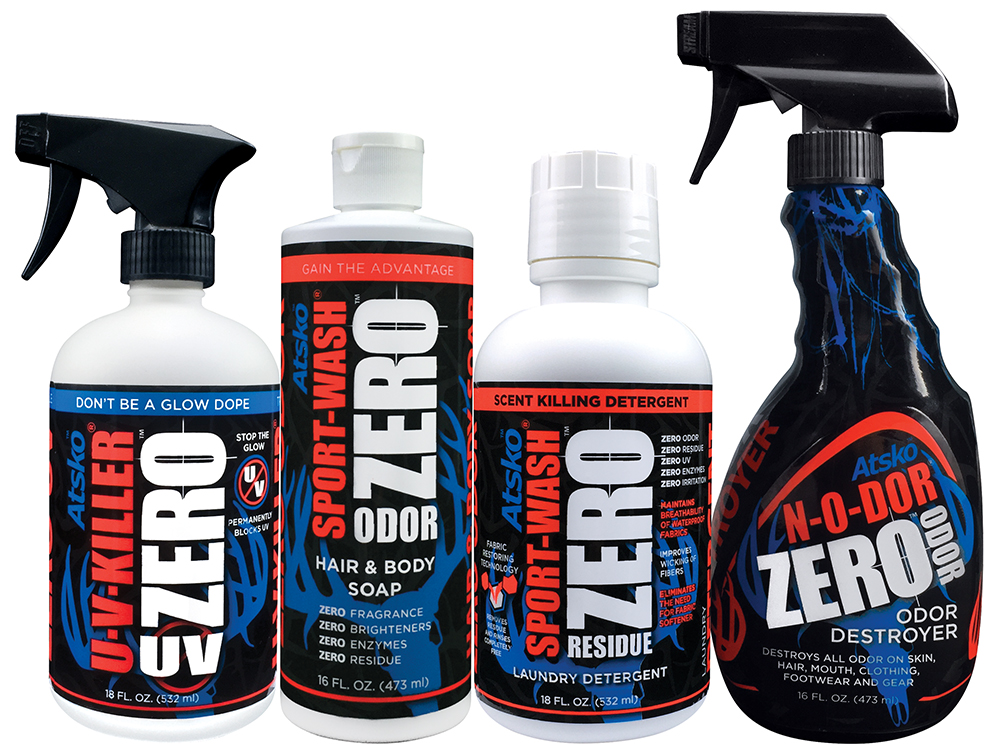
Understanding how a deer’s eyes work is most useful when it changes what you actually do in the field. Since their visual system is tuned to pick up motion and short-wavelength light far better than ours, the practical edge comes down to two things: moving carefully, and not giving off light or scent signals you can’t see or smell yourself. That’s the gap Atsko’s hunting gear is built to close — from UV-blocking treatments that keep fabric from glowing in exactly the light range deer are most sensitive to, to scent-control products that address the sense most hunters underestimate entirely.
Related Reading
- Can Deer Really See UV? — the science on UV sensitivity and why brighteners in fabric matter
- How to Check Your Hunting Gear for UV Brighteners — step-by-step testing and treatment guide