












If deer are more sensitive to UV light than humans, and UV brighteners in fabric and detergent make camo and blaze orange reflect that light, the practical question is simple: how do you know if your own gear is a problem, and what do you actually do about it?
This page walks through both — a two-minute test you can run at home, and the full process for neutralizing brighteners if you find them.
Step 1: Test Your Gear for Brighteners
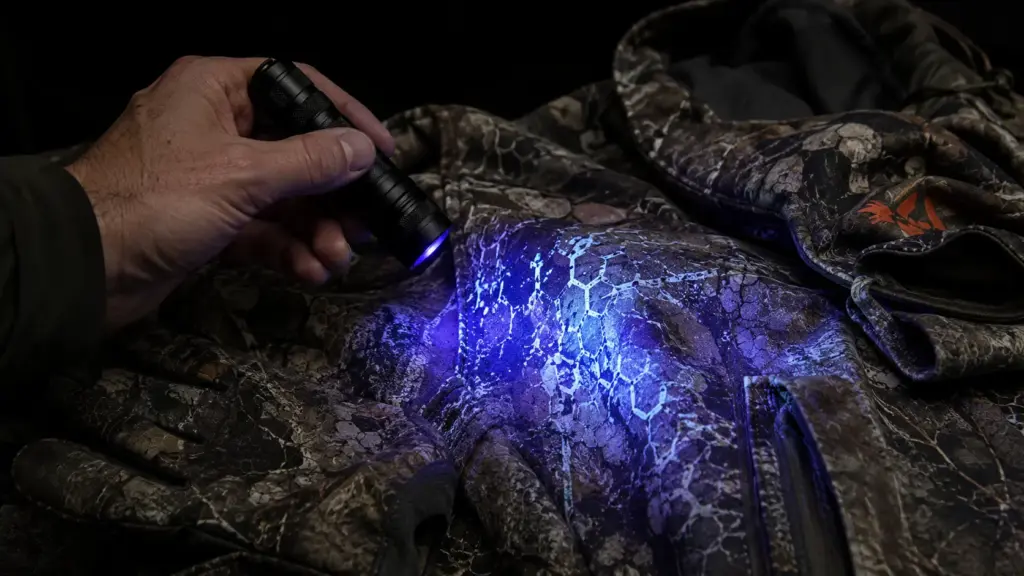
What you need: A UV (black light) flashlight or bulb, in a UV-A “BLB” (blacklight blue) wavelength — 350–365nm is the range typically used to check for brighteners. A small battery-powered UV flashlight works fine for spot-checking; an 18″ fluorescent BLB fixture mounted in a laundry room is a good option if you want to check gear regularly.
How to test:
- Go into a dark room or closet — the darker, the more obvious the result.
- Shine the UV light on your camo, blaze orange, or any treated fabric.
- Look for a bright blue-white glow. That glow is the brightener fluorescing under UV light — visible to you because the light bulb converts UV into visible blue, but a preview of what a deer may see directly, since deer have some natural sensitivity in that range.
What counts as a fail: Any distinct glow. New fluorescent orange garments almost always contain brighteners as part of the manufacturing dye process, whether or not they’ve ever been washed. Most laundry detergents also contain them, so gear washed in a typical household detergent picks brighteners up even if it started clean.
Good habit: Test your washing machine and dryer too, not just the clothes — residue from previous loads (especially with kids’ or white laundry) can transfer brighteners onto anything washed afterward. Run a load of ordinary, non-hunting laundry through first if you’re worried about cross-contamination.
Step 2: Decide What You Need
| If your gear… | Then you need… |
| Glows under UV but you just want to stop making it worse | Switch to a detergent formulated without optical brighteners |
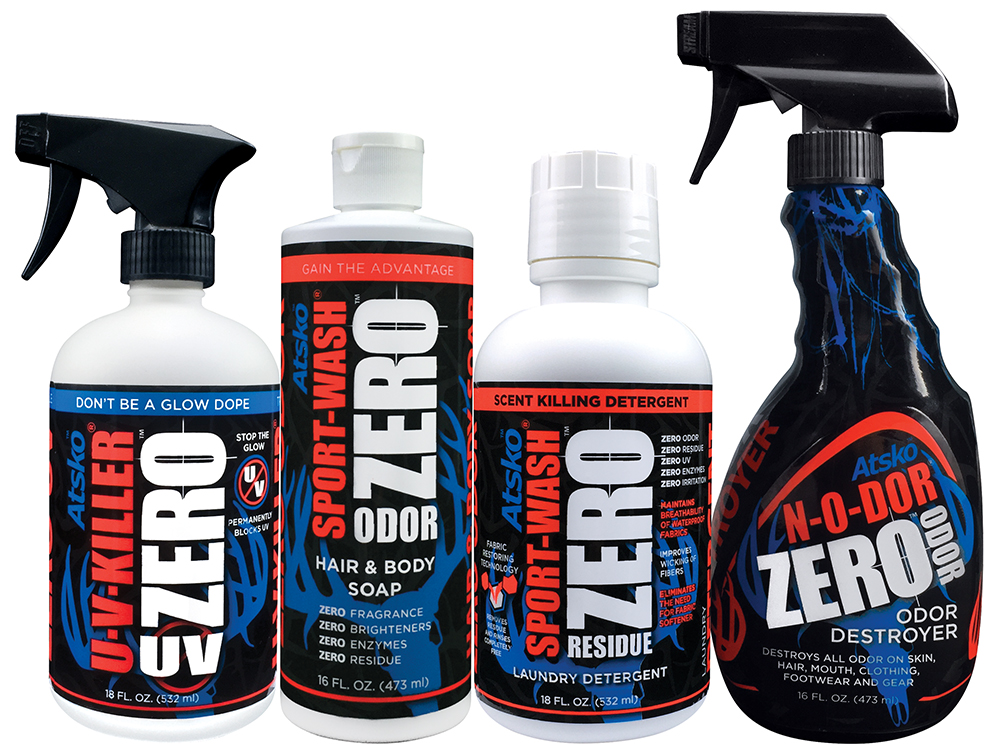
| Glows under UV and you want the glow gone now | A UV-blocking treatment (like U-V-Killer) applied directly to the fabric |
| Doesn’t glow | You’re set — just avoid detergents with brighteners going forward |
Regular detergent doesn’t remove brighteners once they’re bonded to fabric — a brightener-free wash just stops adding more. To actually eliminate an existing glow, the fabric needs a UV-blocking treatment applied on top.
Step 3: Prep the Garment
Before applying any UV-blocking treatment, the fabric needs to be genuinely clean — not just “recently washed.”
- Wash first in a detergent that rinses completely, with no residue left behind. Leftover soap, oil, grease, dirt, or sizing on the fabric will prevent a UV-blocking treatment from bonding properly.
- Avoid fabric softeners and “color-safe” bleach in this wash — both commonly deposit new brighteners onto the fabric, undoing the point of the wash.
- Let the garment dry before moving to treatment.
Step 4: Apply the UV-Blocking Treatment
Technique differs slightly depending on the fabric.
Standard camo or blaze orange fabric:
- Spray evenly until the surface is fully covered — treat it like you’re applying a new layer of color, not just misting it.
- A small brush helps even out coverage, especially on textured fabric.
- You can check your work with a UV light while the treatment is still wet — any spot that still glows needs another pass.
Fleece or insulated garments (extra care required):
- Apply a thin coat only — work in small sections rather than spraying the whole garment at once.
- Use a small stiff brush to raise a light froth on the surface as you go. The froth keeps the treatment sitting on the visible surface instead of soaking deep into the insulation, where it adds no UV-blocking benefit and can stiffen the fabric.
- Deep soaking wastes product and doesn’t improve performance — surface coverage is what matters.
Water-repellent fabrics (including most fluorescent orange):
- These resist wetting by design, so make sure whatever treatment you’re using is formulated to wet out on repellent fabric — otherwise it beads up instead of bonding.
Step 5: Cure Time
- Garments can be worn once fully dry, but the bond needs roughly 72 hours of ventilation to reach full durability and for the garment to be scent-free.
- Hold off on rewashing, waterproofing, or applying cover scent during that 72-hour window — those steps can interfere with the bond before it’s set.
- Done correctly, the treatment is designed to last the life of the garment under normal use.
Maintenance Notes
- One wash in ordinary detergent, fabric softener, or color-safe bleach won’t strip the treatment — but it will layer new brighteners on top of it, which defeats the purpose. Stick to a brightener-free detergent for treated gear going forward.
- Check your gear each season with a UV light before the first hunt, especially if it’s been laundered with other household items in between.
- Wash a load of non-hunting laundry first whenever you’re about to wash treated gear, to clear brightener residue out of the machine.
Quick FAQ
Does new gear need this, or only old/washed gear? Both. Brighteners are frequently present in fabric straight from manufacturing, before it’s ever been washed — test before you assume new gear is clean.
Can I just avoid the problem by never washing hunting clothes in regular detergent? That prevents new brighteners from being added, but it won’t remove ones already baked into the fabric from manufacturing. Test with a UV light to know which situation you’re in.
Does this apply to blaze orange too, not just camo? Yes — in some ways more so. Blaze orange is a long wavelength that deer are already weak at distinguishing; if it’s also carrying UV brighteners, it becomes far more visible to deer than the “safety” color is often assumed to be.
How long does one bottle of treatment last? Coverage varies by product, but as a rule of thumb, one bottle of a spray-on UV blocker like U-V-Killer treats about one insulated suit, or two thinner sets of camo/blaze orange.