








The Camo Conspiracy

From politics to the X-Files it seems we constantly face situations so absurd that they could not have developed by chance. The scope, subtlety, and unlikeness seem to suggest predetermined intervention. A grand plan so flawless it would be undetectable if I hadn’t witnessed it myself.

Would you believe that all hunters are actually expected to go into the field bearing prominent identifiers, so they can easily be avoided by deer and other game animals? Yes, you sigh. This sounds like the logical endgame of a politically correct effort to give the quarry an even chance against the resources of the modern hunter. And it’s true we could be persuaded to carry a little handicap to make the sport more sporting. The fact is, Black Powder, Archery, and especially Primitive Archery are all chosen for this and other valid reasons.

Now try to imagine the handicap has been imposed without our consent or knowledge. Certainly this could not be. No one could possibly trick us into sacrificing the stealth we work so hard to maintain. We would not be foolish enough to carry markers that would signal our presence to the eyes and nose of the deer. This would drastically reduce our enjoyment of the sport by decreasing our chance of seeing an animal. It’s one thing to impede our harvest; but quite another to spook them off unseen.

IN ANY CASE, SUCH HANDICAPPING COULD NEVER BE IMPOSED WITHOUT OUR KNOWLEDGE. It’s not technically possible to fool all of us all the time. We are some of the most resourceful humans on the planet. We spend our lives studying the outdoor environment, especially the ecology and habits of deer and the game animals we seek.

Even if such deception was possible, who could impose it and how could they secretly gain the cooperation of the manufacturers, distributors, retailers, writers, and other professionals who would surely stumble upon the truth? How could you possibly buy their silence, especially the outdoor media? Would not the revealing of such a conspiracy be the biggest story in the hunting industry? Who could possibly keep this secret? Who would want to? The truth is out there!

ARE DEER IN BED WITH THE MARKETERS OF HUNTING PRODUCTS? DO DEER MAKE PAYOFFS IN RETURN FOR PROTECTION FROM HUNTERS?

Perhaps this is a simple mystery to solve? Let us just follow the money, the greed, and the pride. Assume for the moment that deer do not have a rich and powerful political action committee with resources to push an agenda protecting themselves by forcing hunters to carry markers for easy identification. The deer are then simply fortunate beneficiaries of the conspiracy. Certainly grateful for its existence, they can do little more than protect it by their silence.

Indeed, the arrogance and profits of men and their institutions are the more likely perpetrators of this conspiracy. While the genesis may be murky, it’s clear that once in place, pride and profit would likely be lost if it were exposed.

Animals have certainly used camouflage since the evolution of vision. In the 20th century the military developed camouflage to hide form other humans. Soon, entrepreneurs began offering camouflage to hunters who happily assumed that deer certainly could not see anything not seen by the most magnificent of God’s creatures. If you were less visible to your buddy…..surely you were less visible to a deer.

The modern hunting camouflage industry was born. In no time there were hundreds of different patterns that could make you less visible to humans when viewed against different backgrounds. Patterns came and went. New patterns were claimed to work in wide ranges of conditions. Elements of different patterns were combined with each other. (A clever way to justify multiple royalties). Today you can perfectly match flora, terrain, and season in places that don’t even have deer. All this wonderful camouflage (did I mention faithful reproductions of some of the prettiest dead leaves you ever saw?) makes it possible to hide from human sight anywhere you choose.

Paintball enthusiasts have an endless array of camouflage to choose from because every single pattern is designed to help hide you from human vision. Unfortunately for hunters, hardly a piece exists that will reduce your visibility to animals. Quite the contrary, it’s all stunningly alike to the visual system of the white tailed deer! IT ALL GLOWS! Every piece is painted with a color humans can’t see. This very same color just happens to match the peak of visual sensitivity of the white tailed deer.

But this essay isn’t about technical details. You can get that whole story from a booklet called “How Game Animals See and Smell.” No, I’m exploring the conspiracy. Dozens of companies and experts of every stripe committing themselves to the concept of choosing camouflage based upon how it appears to humans. It is easy to recognize, and to differentiate, easy to sell, easy to “understand” and easy to build a system of royalties and personal endorsements to provide financial incentive for everyone involved. (Except for the deer and I already explained why they won’t talk.) The media are doubly blessed. They have sold millions of pages of stories about the effectiveness of different patterns of what I like to call “paintball” camouflage. Bigger photos are needed because the reader has to see the successful pattern well enough to judge for himself how well it hides the successful hunter. But the biggest windfall is the advertising. How many times have you searched a beautiful four-color process gravure quality photo for one more hunter who blends perfectly into a complex background when viewed by a human? The marketer swells with pride as he signs the space contract to run a picture so perfect he himself cannot spot the hunter.

But alas, the best conspiracy can fall apart if exposed. In 1984 it almost happened. (Here comes my obligatory reference to “big brother”.) The U.S. Army research facility at Nadick Mass. finished a comprehensive study of camouflage. Since the military is primarily concerned with hiding from humans perhaps the secret would be safe. Perhaps they would simply add a few new patterns to this years “paintball” collection.

As it turns out, the military was clever enough to figure out that if we use Ultraviolet (UV) and Infrared (IR) vision systems and often take dogs to the field for their superior senses, our enemies might do the same. Their new requirement addresses, among other things, visibility to machines and animals that can see shorter wavelengths (UV) than humans do. The new rules state UV optical brightening dyes can not be present in military camouflage.

Surely the game was up. The new specs went directly to the manufacturers of military camouflage, many of whom also printed camouflage for hunters. Any one of them could have begun making hunting camouflage that did not glow to game animals. Camouflage without the fluorescent glow, just as required for our soldiers by the government specs

Thankfully for the deer, no one caught on. The “paint ball” camouflage continued to proliferate with its unmistakable bright glow warning animals of danger. The marketers were so obsessed with the virtues of their copyright protected patterns that they never even considered how their camouflage might look to a non-human. (This is as close as I’m going to get to aliens.) “What difference could it possibly make? We’re selling these patterns to hunters, not to deer.”

In 1985 a small manufacturing company created a new detergent, from scratch, specifically for hunters. At the time there were only a couple of laundry products labeled for hunters. The two existing products both contained, among other things, perfume and UV brightener. This new product, Sport-Wash, contained neither and made a point of announcing this special deficiency. This could have destroyed the conspiracy.

Amazingly it went unnoticed or ignored by the marketers of glowing “paint ball” camouflage.

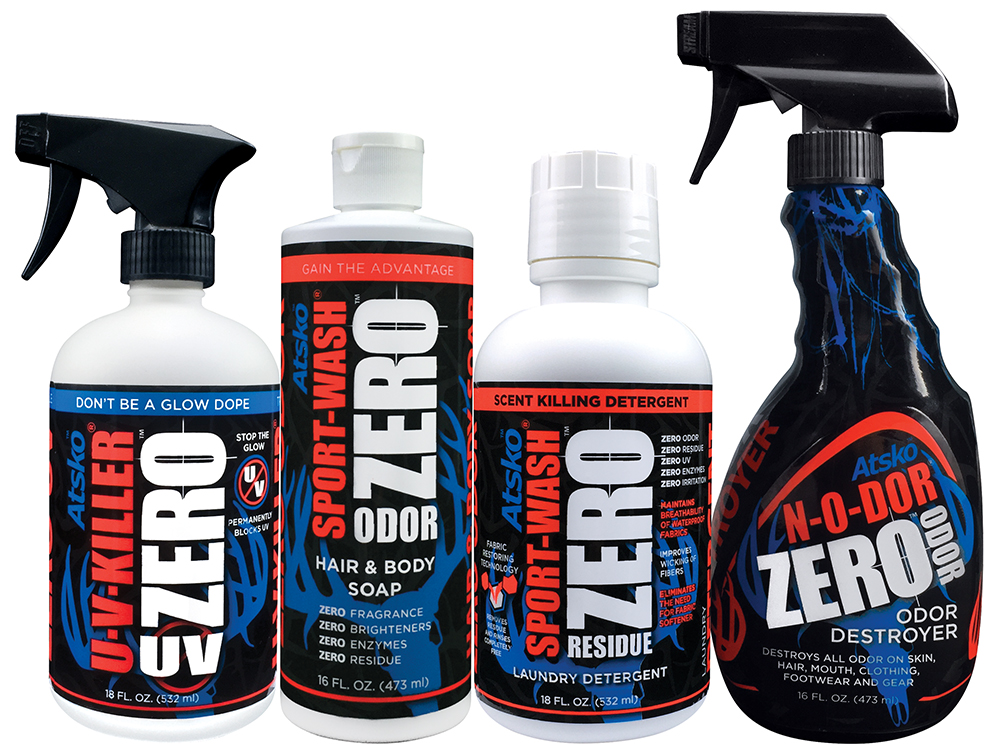
A few years later, U-V-Killer was introduced by the same company. It was engineered to eliminate the UV glow deer see so easily. Trying not to alienate the camouflage manufacturers, they tiptoed gently around the fact that patterns made little or no difference compared to the glow. They foolishly anticipated camouflage manufacturers would recognize the significance of their revelation and begin making all of their patterns without UV brightening dyes.

Millions of hunters treated their “paint ball” camouflage and experienced the thrill of seeing and harvesting more game. Some camouflage manufacturers soon made their patterns without brighteners and used hang tags to advise their customers. This should have been the end of the story, conspiracy dissolved.

Fast forward to 1996. Spot checking the camouflage shelves revealed brighteners had reemerged in the new camouflage. Is it possible that “paintball camouflage” was making a comeback?

1998. More new camouflage has brighteners. Perhaps more people are buying it for paint ball than for hunting.

2001? Almost 100% of all new camouflage has the big bright glow of UV fluorescent dyes. THE CONSPIRACY IS INTACT. Deer can relax knowing they can count on the glow to warn them of danger.

How can this be? Is it so hard for them to admit they’ve been wrong, that it’s easier to persist in the deception. Ignoring the facts won’t make them go away. Maybe, like front wheel drive on the 1937 Cord, this technology is still way ahead of its time. Maybe so, but one would expect at least one brave manufacturer to recognize this as an opportunity to gain competitive advantage, even if he couldn’t claim it was all his idea. So what keeps this conspiracy together?

And what about the Fourth Estate? How many authors have figured it out? Hunting camouflage should hide hunters from animals, not other hunters!

What is it that keeps this conspiracy together? Best guess? A combination of several minor details.

  • Glowing camouflage looks better to humans in stores. If it sells well, you certainly can’t fault the marketer for providing what his customer wants.
  • Maybe paintball is bigger than hunting. Kids outgrow their camouflage every year and paintball is growing fast. More camouflage is worn to school, work and play than to hunt.
  • “Paintball” camouflage is easier to make. No need to check every lot of all ingredients and processes for UV brighteners. They can be in the base-cloth, dyes, durable water repellant, washing, or finishing.
  • “Paintball” camouflage is quicker to make. When you get an in season rush order from your biggest customer you grab whatever cloth you can find and start printing. All stock material has optical brighteners. Non-prebrightened material costs no more but won’t arrive till after hunting season is over and the order is canceled. (What conspiracy would be complete without the evils of bigness and efficiency?).
  • The ego thing. It might blow your credibility to suddenly admit you’ve been making paintball camouflage all along. What really hurts is that the Ph.D.’s who researched animal vision don’t even make camouflage.
  • The power thing. If you’re one of the top few players your hand might deteriorate when the deck gets reshuffled.

Maybe it’s none of the above, just inertia. Newton’s law about an object in motion…. It works like this. Mr. Hot New Pattern decides he’s going to optimize his product for hunting instead of paintball. He visits the printer and explains all about how animals see differently than people. The boss says “Sure, we can do that”. Joey on third shift runs the special bolts of “unprebrightened” material that took 11 weeks to arrive. He uses it to finish a run of table-cloth-plaid and the entire job gets rejected. (The customer says some of it looks a little dull and dingy.) Mr. Hot New Pattern’s order is due and the material can’t be replaced for 11 weeks. The Boss tells Joey to ” just run it on whatever ya got”.

Two weeks later Mr. Hot New Pattern is on the phone talking about animal eyes again. “Look, we been printing camouflage for 22 years, it looks great to me, if you don’t like it award your itty-bitty job to one of my esteemed competitors.”

Two weeks later Mr. Hot New Pattern is on the phone talking about animal eyes again. “Look, we been printing camouflage for 22 years, it looks great to me, if you don’t like it award your itty-bitty job to one of my esteemed competitors.”

Mr. Hot New Pattern debuts his new product at the SHOT SHOW. The buyers love it. They all agree their customers will have great difficulty seeing it against common hunting backgrounds.

Sales are great and by winter the new pattern is all over the woods.
The deer study the hunters. They expose their teeth a little.
Is that a scent-enhancing behavior?
Deer can’t smile …. can they?

So. Is it a conspiracy? Did somebody get to Joey? Or was he preoccupied because he had just called O.S.H.A. to harass his boss who is planning to move the printing operation to Sri Lanka? (What a transparently shameless effort to add a Red-button acronym agency and the threat of foreign takeover.) It’s impossible to say for sure and might be libelous anyway. This may be just the tip of the iceberg.

How much longer can this deception be maintained?
THE TRUTH IS OUT THERE…… Isn’t it?

Just one more point to ponder, If the deer population has tripled, and we now have vastly superior camouflage and weapons, why has the hunting success rate stayed the same?

We may never learn the full extent of the conspiracy, but you can read all the technical facts about animal vision in the booklet “HOW GAME ANIMALS SEE AND SMELL” available for $1 from ATSKO INC. 2664 Russell, Orangeburg, SC 29115. Phone: 803-531-1820 or E-mail [email protected].

Watch these same postings for the sequel, “THE ORANGE CONSPIRACY”: A life and death drama that is sure to involve lawyers. To be included, excluded, or ignored e-mail Dan Gutting c/o [email protected].

Color Vision in Deer

When I was growing up, I learned that birds had an even keener color sense than mine; but it was widely held that deer, dogs, and lower mammals were all completely color-blind. Now science has proven that this is simply not true. Neither deer, nor our canine friends live in a black-and-white world, but instead have dichromatic vision- that is, they can see all hues of blues and yellows, but they are red-green color blind. This dichromatic vision makes deer unable to see most shades of color, but it heightens visual sensitivity to movement.

In fact, deer can even see into the ultra violet, where blues that are invisible to us appear as bright fluorescent to them. And in nature only some flowers are blue, so when we wear any kind of blue it stands out in stark contrast to the deer. Study the chart below:

COLOR PERCEPTION IN DEER
But, you tell me, all of my hunting clothes are camouflage, they have no blue in them. True enough, but if you are washing your clothes in regular laundry detergent, they are coated with the dyes and UV brighteners that are added to all commercial laundry detergents.

You can see this by using a black light on clothing with UV Brighteners. The deer can see it in any low light conditions; in cover, in early morning or evening, anywhere you would expect to find deer. (You wouldn’t see them in the middle of an open field at noon, would you?)

When I found this out, I bought laundry detergent advertised as “Free of perfumes and Dyes”. However, my clothes were still fluorescing because “free” really isn’t. What the detergent maker does is to use “Cover Scents” instead of perfume and they now call bluing, (Ultra Violet Brightener Dyes,) “FWA” (Fluorescent Whitening Agents,) instead of the dye it really is. It lists Flourescing Whitening Agents right on the ingredient label, even though it is supposedly free of dyes.

The only way to avoid this glow is to use SPORT-WASH laundry detergent. It is totally free of dyes, fragrance, phosphates, oxidizers, color, fluorescent whiteners, and lubricants. After using SPORT-WASH, you should spray your hunting clothes with UV-Killer. Because when your fancy patterned camouflage clothes were manufactured, they used UV Brighteners in the original dyes. That’s right- they made them to attract YOUR eye, instead of making them for maximum stealth in hunting. (Cabela’s carries both Sport-wash, UV killer, and Carbon Blast.)

One last thing the astute deer hunter would be quick to point out to me- deer depend on their ears and nose much more than their vision. Yes, that’s true. A deer is a jumpy animal. Every little sound that is out of place will make it squirrelly, and their sense of smell is almost as good as a Bloodhound. But, if you are using a scent blocking agent, (like Carbon Blast,) and are moving as quietly as possible through the woods, don’t give away your position by looking like a neon sign to the deer. Use every advantage you can to even the playing field between you and the deer, and a trophy just might be yours the next time you hunt.

© Huntlady 2002

Hunter Orange: Proving the Obvious

By Wayne Jones, New York State Hunter Education Administrator

ORANGE NOT AS POPULAR THESE DAYS
For years, hunter orange clothing has been just as much a part of hunting equipment as your rifle, shotgun or hunting boots. However, according to recent observations and at least one survey, this is changing wherever orange is not required by law. According to information on the IHEA website (there are lots of exceptions to hunter orange requirements; and seven Canadian Provinces and Territories, and 10 U.S. States don’t have orange laws. With the increasing popularity of camouflage clothing, hunter orange may no longer be the standard for hunters unless the law forces them to wear it.

Deer have the equivalent of red-deficient color blindness in humans. This makes orange and green look very similar, as seen in the photo above (made with Vischeck color blindness simulation software). That’s why hunter orange does not alarm deer. In spite of this, fewer hunters are wearing orange, seemingly unaware of how this affects their safety.

Most hunters know that deer and most other game animals (except birds and probably bears) are what humans would call red-green color blind, as well as being less sensitive to light at the red-orange end of the spectrum. They can’t see orange and red colors the way we do, and they are not alarmed by motionless hunters wearing it. There is a ton of scientific evidence of this, plus the experience of millions of successful hunters who would not be caught in the woods without hunter orange.

Even so, many people notice that the hunters on TV, in magazines, and in the field are wearing hunter orange less. There is scientific proof, too. Surveys of hunters in New York, where hunter orange is not required, found that use of hunter orange by big game hunters rose from 81 percent in 1991 to 85 percent in 1996, but then fell back down to 81 percent in 2001. That’s a five percent decline, and there was also a seven percent drop in the use of hunter orange for small game hunting. With the use of hunter orange declining, it would be nice if we could tell hunters and our hunter education students exactly how much safer wearing hunter orange makes them.

Those numbers are not easy to find. It’s common sense that a color that stands out like a neon sign to the human eye will make it less likely that another hunter would shoot in your direction. But some people—especially those opposed to requiring hunters to wear hunter orange—raise questions about the effects of hunter orange.

To answer those questions, New York State did an intensive study of hunting-related shooting incidents. The results answered those questions and established hard numbers proving the effects of hunter orange.

QUESTION: If hunters are required to wear hunter orange, won’t a lot of careless hunters shoot at anything that is not orange, resulting in more non-hunters getting shot?

ANSWER: This question shows a very low opinion of hunters who have actually been reducing shooting incidents for many years. Beyond noting that 99.99 percent of hunters don’t cause shooting incidents, the question is very easy to answer. Since 40 states have passed laws requiring hunter orange, if hunters were as careless as some people seem to think, all those states would have experienced increases in non-hunter victims after new hunter orange mandates. New York looked at the 32 states who had orange laws and also had detailed incident data before and after the legislation passed. Not even one of them had any increase in the number of non-hunter victims in the five years after requiring hunters to wear orange. (That kind of incident is very rare to begin with.) That’s the kind of historical proof that answers the question, and should give the skeptics a higher opinion of hunters.

QUESTION: Some states with mandatory hunter orange have higher hunting injury rates than states with no such requirements. Does that mean hunter orange causes accidents?

ANSWER: To answer this, NY looked closer at the comparisons between states. States that had higher rates of hunting-related shooting incidents after they mandated hunter orange also had higher rates before they mandated orange, and those rates never increased after requiring orange. On the contrary, incidents decreased every time. That means that hunter orange laws certainly were not the cause for differences in injury rates. In fact, it does not even make sense to compare rates between states. There are hundreds of differences between states such as species hunted, length and timing of seasons, vegetation, terrain, and hunter density to name just a few of the most obvious. Blaming differences between states on any single factor such as clothing just does not make sense. For a more obvious example, would it be logical judge the effects of highway guard rails by comparing state-tostate accident rates? States like Vermont with lots of guard rails have more cars sliding off the roads than states like Oklahoma with fewer guard rails. Does that mean guard rails cause increased accident rates? (Don’t bother answering.)

QUESTION: Hunting-related shooting incidents are already rare. Can hunter orange really make that big a difference?

ANSWER: First, remember that one of the reasons that hunting injuries are rare is that most hunters wear hunter orange. Looking at the numbers scientifically, there are two valid ways to measure the actual effects of hunter orange on huntingrelated shooting incidents. The first is comparing injury rates before and after mandating orange on the same turf. Yet even this has problems, because other factors can change from year to year, too. The second method is the best test—comparing injury rates of hunters who wear orange with those who don’t wear orange in the same time and place. Calculate that you need detailed information about each hunting-related shooting incident (HRSI), AND a good measure of the percent of hunters who do and don’t wear hunter orange. The problem with this is that it’s not easy to find good statistics of how many hunters in the population don’t use hunter orange, especially if the law requires it. In New York, there are close to 700,000 hunters, and there are no laws telling them what to wear. As a result, you can expect honest answers when you ask what they wear to hunt. We already talked about the percentage of hunters who wear hunter orange. Here’s what we found out about the differences in the injury rates of the two sub-populations of hunters—orange versus no orange.

Before and After Data: Every state that requires hunter orange reported a decrease in injuries when the orange requirement was enacted. That’s no surprise. Along with the color requirement, there is generally a lot of public information about hunting safety, so it’s hard to separate how much of the reduction was due to the direct effects of hunter orange and how much was due to more cautious hunters. An indication of this is that many states and provinces see a reduction in all kinds of hunting injuries—not just the visibility-related ones (victim mistaken for game and victim in the line of fire when shooting at game). The important thing is that hunter orange works, but some might argue that a strong public information campaign is responsible for a big part of the safety improvement. One experience, however, left no doubt about how much hunter orange was directly responsible for reducing injuries. Prior to mandating hunter orange statewide, the state of Maine did a landmark five-year trial in one heavily hunted county. Maine required hunters in York County to wear hunter orange starting in 1967. Looking at only those injuries that could be directly affected by hunter orange, Maine found that York County had 41 percent of the state’s visibilityrelated incidents during the five years before the one-county orange requirement, but only 23 percent in the five years after. Even if some of the Maine hunters outside York County got the safety message and wore orange, the County where virtually all hunters wore it is where the big injury reduction occurred.

Comparing Injury Rates : Orange Versus No Orange— The best proof is counting visibility-related injuries and knowing what each victim was wearing, as well as how many hunters wore orange and how many didn’t. That allows us to compare injury rates of hunters who did not wear orange against those who did. Adding up these simple counts over a period of years gave New York clear, quantified answers about the effects of hunter orange. The results were part of a 1994 report using HRSI records from 1989 through 1993. See chart (left) for the results.

DRAMATIC UPDATE: Short messages summarizing one important point are more effective than mountains of data in terms of affecting hunter behavior. New York hunter education staff combined the big game and small game figures about hunter orange (even though it is combining apples and oranges) to coin the phrase that “Hunter orange keeps you seven times safer.” More recently, the figures about big game hunting fatalities in New York have provided an even more dramatic example to urge hunters to wear hunter orange, even if the law does not require it. This year, the New York State Hunting and Trapping Regulations Guide and news releases feature the following message. “Don’t be a victim! Four out of five NY big game hunters wear hunter orange. Since 1992, none of them have been mistaken for deer and killed. But 18 hunters who did not wear hunter orange were mistaken for deer and killed.” Let’s hope hunters get the message. Better yet, let’s deliver it!

COMPARING INJURY RATES
BIG GAME HUNTING
(excluding bowhunting and muzzleloading seasons)

VISIBILITY-RELATED FATAL INJURIES ALL INJURIES
Clothes Hunters No. Rate Ratio No. Rate Ratio
Orange 2,787,866 1 0.04 1.0 12 0.43 1.0
No Orange 653,944 9 1.38 38.4 35 5.35 12.4

ALL 2-PARTY FATAL INJURIES ALL INJURIES
Clothes Hunters No. Rate Ratio No. Rate Ratio
Orange 2,787,866 2 0.07 1.0 36 1.29 1.0
No Orange 653,944 18 2.75 38.4 65 9.94 7.7

SMALL GAME HUNTING
(excluding turkey hunting and waterfowl hunting)

VISIBILITY-RELATED FATAL INJURIES ALL INJURIES
Clothes Hunters No. Rate Ratio No. Rate Ratio
Orange 1,630,369 0 0.00 1.0 8 0.49 1.0
No Orange 957,518 3 0.31 infinite 30 3.13 6.4

ALL 2-PARTY FATAL INJURIES ALL INJURIES
Clothes Hunters No. Rate Ratio No. Rate Ratio
Orange 1,630,369 0 0.00 1.0 25 1.53 1.0
No Orange 957,518 3 0.31 infinite 79 8.25 5.4

NOTES:

  • Hunters generally do not wear hunter orange for bowhunting and muzzleloading, or for turkey and waterfowl hunting, so those figures were not included.
  • Hunter numbers and injuries are cumulative, counted and added each year.
  • Rate means injuries per 100,000 hunters in the category
  • Ratio – Example: A big game hunter not wearing hunter orange was 7.7 times more likely to be shot by another hunter in the regular firearms season in New York between 1989 and 1993.
  • Differences in fatality rates for small game hunting are not statistically significant (P>0.05), due to the extremely small number of fatal incidents.

The figures above were part of a more general 1994 report entitled “Hunting Accidents in New York: Their Causes and Prevention.” The report did not suggest that the victim of an HRSI is responsible for being shot. The figures were reported to demonstrate the effectiveness of hunter orange as a tool to help avoid being a victim of another’s mistake.

Similar results for 1989-1995 data were published in the Center for Disease Control and Prevention’s “Morbidity and Mortality Weekly Report” of October 18, 1996, but without injury rates.

Solid Orange v. Camo Orange

The following article is the result of a formal study recently completed by senior graduate students at the Southern California College of Optometry and supervised by professor, Dr. Walter Chase, a renowned authority on visual reception. The study was designed to determine scientifically if there is a difference in the detectability and visibility, by human observers, in clothing made from solid orange vs. camouflage pattern orange.

Authors:
Kelly Olson and Todd Childs
Senior Graduate Students
Souther California College of Optometry

Walter Chase, O.D., M.S.,
Professor of Visual Science
Southern California College of Optometry

Statistical Analysis:
Paul DeLand, Ph.D.
Department of Mathematics
California State College, Fullerton

ABSTRACT
Purpose: The purpose of this investigation was to determine if there is a difference in the delectability and visibility, by human observers, of clothing made from solid orange vs. camouflage-orange cloth.
Methods: Subjects: 53 adult subjects from 20 to 83 years of age volunteered as subjects.
Setup: The environment was a wooded area with a grassy clearing with pine trees as background on a clear summer evening. One target each of solid and camouflage Hunter Orange targets were hung on easel stands separated by 10 yards at a distance of 100 yards from the subjects. Targets were 216 inches square, the approximate size of an average male’s torso. Procedure Subjects were instructed to identify the most detectable target of the two when abruptly revealed, and the most visible target on sustained viewing. Five to ten people were tested at one time for five trials each.

Results: For detectability, 79% found solid orange more detectable than camouflage orange on the basis of having a count of 3 or more out of 5. For visibility, 91% selected the solid target 3 or more times out of 5. Comments: In this study which simulates a stationary hunter, the solid Hunter Orange cloth sample orange was significantly more detectable and visible than the camouflage pattern. It remains to be determined if this finding is true over a wide variety of hunting environments and situations.

OBJECTIVE
The purpose of this study was to determine if there is a difference in the detectability and visibility, by human observers, of clothing made from solid orange vs. camouflage orange cloth. This study may provide valuable information that is important to hunting safety and to the legislation of hunting laws. It could have impact on the 17 million people who purchase hunting permits in the United States each year. This project may also initiate other studies that ultimately result in safer hunting procedures and regulations that save lives.

BACKGROUND
The use of “Hunter Orange” garments is a safety measure. It is worn by hunters to increase their visibility to other hunters so that they will not be mistaken for game. The International Hunter Education Association (IHEA) and the Canadian Ministry of Natural Resources define “Hunter Orange” as “having a dominant wavelength between 595 and 605 nanometers, a luminance factor of not less than 40% and an excitation purity of not less than 85%.” 2, 3

According to a 1995 survey supported by the IHEA, forty states in the U.S.A. and five provinces in Canada require hunters to wear Hunter Orange for big game hunting. All other states strongly encourage hunters to wear Hunter Orange. It should be noted, in those states requiring Hunter Orange, that the amount, specified in square inches, and the type of garment vary according to state regulations. Most states require a total of 400-500 square inches to be visible on the chest, back, and head. Sixteen states and three provinces specifically require “solid” Hunter Orange. The remaining states and provinces either allow or do not make specific reference to camouflage-pattern Hunter Orange. Additionally, Maryland, Michigan, Minnesota, and Wisconsin state laws require a camouflage orange pattern to consist of at least 50% Hunter Orange.

Several studies have demonstrated that there is a lower proportion of hunting accidents among those hunters who wear Hunter Orange compared to those who do not wear Hunter Orange garments. In New York State from 1989 to 1995, of the 125 incidents in which hunters were mistaken for game, only six (5%) were wearing hunter orange. North Carolina laws requiring hunters to wear orange clothing have significantly reduced the number of deaths and injuries resulting from people being mistaken for game.

A relevant side issue is “how do deer and other large game animals see Hunter Orange garments?” Hunters want to know if wearing bright orange garments will reduce their hunting success. Historically, there are conflicting opinions about the ability of deer to see color. It has been stated that “these animals are completely color blind.” This belief that deer are color blind, and therefore, cannot see Hunter Orange as humans do, may have helped promote acceptance for the use of Hunter Orange garments. There is, however, a body of evidence that supports the belief that deer are capable of seeing color based on anatomy, electrophysiological function, and behavior. Both light and electron microscopy reveal the anatomic presence of both rods and cones in the retina of white-tailed deer. 6

Electroretinogram (ERG) photometry, conducted on two species of deer, has demonstrated the presence of rod and cone cells with maximum sensitivities at 497 nm and 450-460 nm respectively. 7 Behavioral studies have shown that deer can be trained to discriminate color stimuli, providing evidence for the presence of color vision. 8, 9

Although humans have three types of cone cells to provide color vision, carnivores and ungulates, including deer, have a color vision that is based on only two types of cone cells. 10 This simplified type of color vision would result in a difficulty distinguishing colors of objects that reflect light in the middle-to-long wavelengths (green, yellow, orange, and red.) For a deer observing a hunter, this implies Hunter Orange would provide no contrast against the surrounding field environment. However, these animals have an excellent ability to detect blue and UV light that is filtered out by the human lens. A hunter who wears garments that are highly reflective of UV light may be more visible than one whose garments do not reflect UV. 10

Among hunter education associations and state hunting agencies, the use of Hunter Orange clothing is broadly accepted as a means of making a hunter more visible and detectable to other hunters. To our knowledge, however, there have been no studies, reports or surveys to date that specifically evaluate the visibility, and thus the safety, of solid versus camouflage-pattern Hunter Orange garments. Nevertheless, manufacturers of hunting garments are producing and marketing a vast selection of camouflage Hunter Orange garments and state agencies are implementing or perpetuating hunting garment regulations. This may lead to more accidents and injuries in the field, as hunters assume they are visible safe enough to other hunters. Therefore, a scientific study evaluating solid and camouflage Hunter Orange is needed.

METHODS
Subjects: We recruited 53 adult subjects to voluntarily participate as subjects in this study. We used a sample of convenience for enrolling subjects who were individuals who had come to a wooded picnic area for their own relaxation. Subject ages ranged from 20 to 83 years with the mean being 38.7 years of age. There were 30 males, 20 females and 3 subjects who did not indicate their gender on their answer form. Subjects were not screened to determine visual acuity or color vision defects, just as hunters are not screened when they purchase a hunting permit.

Setup: One target each of solid and camouflage Hunter Orange targets were hung on easel stands separated by 10 yards at a distance of 100 yards from the subjects. The cloth, donated by the IHEA, was consistent with the definition of “Hunter Orange” as previously stated. The camouflage target was approximately 50% hunter orange and 50% gray and green splotches. Each target measured 216 inches square, which is the approximate size of an average male’s torso while wearing a coat. The study was conducted on a grassy clearing with pine trees as the background on a clear summer evening.

Procedure: Each subject was shown the location of the targets and instructed to identify which target (right or left) was (1) most detectable Fall 2003 JOURNAL 33 immediately upon removal of a cardboard blind and (2) which was most visible upon sustained viewing. After the subjects had obstructed their view, the targets were switched in a predetermined sequence. The subject then uncovered his/her face, viewed the target, and recorded a response. This was repeated for five trials. For efficiency purposes, subjects were tested in groups of 5 to 10 people at one time.

RESULTS
Figure 1 compares graphically the numbers of subjects who selected the solid target and the camouflaged target immediately after removal of the blind on each of the five trials. For each subject, the number of trials on which the solid target was first detected was determined. These counts range from 0 to 5, but the median is 4, with 79% (42/53) of the subjects having a count of 3 or more, and 53% (28/53) having 4 or 5. If there were no bias toward the selection of the solid or camouflaged targets, the distribution of these counts would have been centered near 2.5. The observed median of 4 is significantly greater than 2.5 (Wilcoxon signed rank test, W = 1181, P < .0005). The median counts for male and female subjects were 3.5 and 4, respectively, which were not significantly different (Mann-Whitney test, W = 541, P = .53).

Figure 2 graphically summarizes the “most visible” data—that is, the numbers of subjects who selected the solid target and the camouflaged target after sustained viewing. For the 53 subjects, the median number of solid target selections on the five trials was 5 with 91% (48/53) selecting the solid target three or more times and 85% (45/53) having four or five solid target selections. The median of 5 was significantly greater than 2.5 (W = 1399.5, P < .0005), and the male and female medians, 4 and 5 respectively, were significantly different (W = 626.0, P = .010).

COMMENTS
Analysis of our data shows a solid Hunter Orange cloth sample, which simulates a stationary hunter, is significantly more detectable and visible than a camouflage pattern Hunter Orange cloth. Further studies are necessary to determine if this remains true over a wide variety of hunting environments, weather conditions and times of day.
If deer and other game animals do indeed have a limited range of color vision, bright orange would not likely stand out to these animals as it does to humans. Rather, hunters should be more concerned with an animal’s ability to see ultraviolet that is reflected from hunting garments.
It is difficult, if not impossible, to predict by how much safer a hunter would be using solid-orange garments. It is our opinion, however, that any safety measures that reduce preventable injury and death outweigh the potential gains of acquiring more game through the use of camouflage pattern orange garments.

REFERENCES

Jones W. Hunting Injuries and Wearing “Hunter” Orange Clothing. New York, 1989-1995. MMWR Weekly. Oct. 18, 1996; 45(41); 451-4.
International Hunter Education Association web site: http://www.ihea. com/iheahorange.php3
Canadian Ministry of Natural Resources web site: http://www. mnr.gov.on.ca/mnr/csb/news/orangefs .html
Cina SJ. Firearm-related Hunting Fatalities in North Carolina: Impact of the ‘Hunter Orange’ Law. South Med J 1996 Apr;89(4): 395-6.
Dalrymple BW. When can your quarry see you? Outdoor Life. 1975; 156;61-65,143-144.
Witzel DA, Springer, HH. Cone and Rod Photoreceptors in the White- Tailed Deer Odocoileus virginianus. American J Vet Res, Vol. 39, No. 4; 669- 701.
Jacobs GH, Deegan JF II, Neitz J, Murphy BP, Miller KV, Marchinton RL. Electrophysiological measurements of spectral mechanisms in the retinas of two cervids: white-tailed deer (Odocoileus virginianus) and fallow deer (Dama dama). J Comp Physiol A . 1994; 174: 551-7.
Zacks JL, Budde W. Behavioral investigations of color vision in the white-tailed deer, Odocoileus virginianus. InvestOphthalmol Visual Sci Suppl, 1983; 24-183.
Smith BL, Skotko DJ, Owen W, McDaniel RJ. Color Vision in whitetailed deer. Psychol Rec. 1989; 39; 195-202
Neitz J. How game animals see. Letter addressed to Mr. Gutting. Pamphlet printed by Atsko Inc. 1999; 11-13.

Camo Considerations

Though deer are not completely color blind, they are nearly so. However, it is still important to match the habitat in camouflage color and pattern. What the deer don’t see in hue, they can see in tonal contrast. A bright green and an olive drab look as different to a deer as they do to you and me, just in a different way.

Reflectance is a big issue. The best camouflage is drab and dull in both color and finish. Different fabrics take dye differently and reflect light differently.

Deer are more sensitive to the ultra-violet spectrum than we are. Hunting clothes should be washed in a pure soap or a detergent that contains no brighteners. There are products called “UV Killers” available that eliminate ultra-violet reflection.

When camo becomes faded, it loses its contrast and much of its camouflaging effectiveness. It also becomes lighter in color and reflects more light. Replace faded camo garments with new ones having a fresh, crisp pattern.

By Bill Jordan, Realtree

Rapid-Rod Barrel Cleaner Information

The ultimate quick and quiet and reliable emergency firearm-cleaning rod has arrived. TheRapid Rod™ has been especially designed to remove barrel obstructions during the hunt and for field cleaning your firearms under adverse conditions. Rapid Rod is the lightest and easiest to use cleaning rod made today. With a collapsed size of 4 1/2″ long and 1 7/8 ounces it is the only full size-cleaning rod that can comfortably be carried in your shirt pocket. The Rapid Rod™ can be assembled and ready for use in just seconds — Without any chance of ever losing a piece, Even in the dark. That’s important on any hunting, or shooting expedition.

A solid rod that fits in your shirt pocket.

No worry about losing any parts, even in the dark or snow

The Pre-assembled Rapid Rod™ unfolds in 6 seconds to become a solid rod.

Removes mud, dirt, snow, or ice from your rife or shotgun barrel while in the field.

Rifle barrels to 26″ – Shotgun barrels to 30″ in Gauges 20 thru 10

Handle passes thru 20 gauge and larger.

Limited 3 year warranty. Corrosion resistant 6061-T6 Aluminum.

Self-aligning joints are guided together by stainless cable.

8-32 female threads so it will accept all standard cleaning accessories

Rugged black Nylon cloth.

RAPID ROD ASSEMBLY INSTRUCTIONS

WARNING, READ BEFORE USING:
Tighten the Rapid Rod™ with sufficient tension to straighten the rod. DO NOT OVER TIGHTEN. Over tightening will not increase the rigidity of the rod, but may damage internal parts. We have included with your rod a soft .22 cal. slotted patch tip. This tip should be replaced with the appropriate jag or slotted tip in the correct caliber or gauge for your weapon before going to the field. The .22 cal. patch tip included was intentionally chosen to be extremely soft and non damaging to gun bores. The patch tip is expendable. Care must be taken not to force or cross thread fittings into the threaded female end of the rod. The use of plastic fittings is recommended.

FOLDING INSTRUCTIONS

Fold your Rapid Rod™ carefully!
Forcing a section to fold under tension will damage the cable and the joints.

Cable slack must be used equally at each fold.

Fold one section at a time starting at handle.

Pull extra cable out of each fold before making the next fold.

PROPER USE
Before loading any weapon inspect the bore to ensure that it is clear of any obstructions. To remove obstructions always insert the rod from the breech, if possible, to drive the dirt and moisture out and avoid damage to the working parts of the breech or the crown of the muzzle.

With Semi-auto or lever actions and whenever you can only enter the barrel from the muzzle you must hold the Rapid Rod™ close to the end entering the muzzle and guide the rod into the bore, insuring that the rod is inserted straight in line with the barrel. This avoids damage to the crown of the muzzle and prevents bending the Rapid Rod. When pushing on the rod, grip it as close to where it enters the barrel as possible to avoid bending. Excessive bending of the rod may damage the shoulders of the connecting joints. In the event of a lodged bullet from a misfire; We recommend you enlist the aid of a qualified gun smith to avoid any damage to the lands or grooves.

LIMITED WARRANTY
Atsko Inc. warrants to the original purchaser, for a period of three years from the date of purchase, that the Rapid Rod™ be free from defects in manufacture and materials. The foregoing warranty is the only warranty, express or implied, given by Atsko Inc., there is no warranty of merchantability and there is no warranty of fitness for a particular purpose.

Atsko Inc. hereby disclaims any express or implied warranties other than the warranty in the first sentence to the fullest extent permitted by law. If applicable law does not permit Atsko Inc. to disclaim implied warranties, any warranties implied by law are limited to the three year term of the express warranty given by Atsko Inc. or any service person, is authorized to make any other warranty or to alter the terms of the warranty given by Atsko Inc.

NOTE: The warranty given by Atsko Inc. does not apply to any Rapid Rod™ which has been subjected to misuse, mishandling, or to any Rapid Rod™ which has been damaged, modified, altered or tampered with, either externally or internally.

The sole and exclusive remedy under this warranty is repair or replacement at Atsko’s option of any Rapid Rod™ that proves to be defective in manufacture or materials within the three year warranty from the date of purchase. To the fullest extent permitted by law, Atsko Inc. disclaims all liability for any direct, indirect or consequential damages alleged to be caused by a defective product, i.e., Atsko Inc. will not be responsible for any personal injury, property damage (other than the cost of replacing the Rapid Rod™) or any other monetary damage such as lost wages or profits caused by any use, attempted use or inability to use the Rapid Rod™.

NOTE: By using the Rapid Rod you agree that repair or replacement at Atsko’s option will fully satisfy Atsko’s warranty obligation to you whether in contract, tort, negligence, strict liability or other applicable law.

Atsko’s sole option, will be to repair or replace any Rapid Rod™ that proves to be defective within one year from date of purchase at no charge to the purchaser except for a fee of $5.00 for handling, packing, return postage and insurance.

Should service be required:

  1. Pack the Rapid Rod™ in a suitable carton with sufficient protective padding to avoid injury to the Rod during shipping.
  2. You must enclose:
    1) Your original packing slip or other proof or date of purchase.
    2) Your check or money order for $5.00, payable to Atsko Inc.
    3) A note describing the problem and how it occurred.
  3. Ship the Rapid Rod™ prepaid, by Insured Parcel Post or
    Insured United Parcel Service(UPS) to:
    Atsko Inc., 2664 Russell St, Orangeburg, SC 29115 Phone (803) 531-1820

When Quality Counts, Count on Atsko/Sno-Seal

Obviously there are many times when quality does not count, or it can be easily determined, or is assured by other circumstances. The astute buyer will be aware of these opportunities to save and will likely take full advantage of them. Often the consequences of poor quality will be limited to the utility or failure of the item in question and the savings of poor quality may be worth the risk.

Quality counts when more is at stake than performance of the item being purchased. A good example of this is the products chosen to clean and water proof clothing, footwear and outdoor gear. Being wet when exposed to cold weather can be life threatening. A cover that fails may result in damage to a boat or furniture. An item may have to be treated more frequently when inferior products are used resulting in wasted time, money and effort.

So how do you judge the quality of a care product before you buy? Take a good hard look at the company and the information they provide. Here are a few questions to ask.

Does the company make this product themselves? It is surprising how few companies manufacture their own products. While this is not always an issue, it does say something about how important they consider manufacturing compared to functions they do themselves such as marketing and distribution. Atsko makes its own products to retain control of quality and costs. We have the benefit of the products history of development and can avoid problems that might be challenging to a new vendor every couple of years who bids for the business. It also reduces transport, especially relative to imported products, so Atsko can provide higher quality at a lower price.

What kind of product information is available? Atsko provides test data, often from university studies and independent labs. These studies are done to ASTM or AATCC standards. Other companies offer claims without substantiation or just anecdotes or “user” observations. Proper studies are expensive, but are the only way to assure reliable information. We explain in detail the conditions of the tests and even provide tip on how you can approximate some tests yourself. The more you know about how a product should perform the easier it is to assess quality.

How complete are instructions? If little or no details are provided, you are not likely to achieve the best results. This is fine for a product of little consequence, but when your comfort and safety may be at risk, instructions are important. Often a good product fails because the user had no information about how to use it correctly. In some cases the success of a product depends upon another product. For example, we guarantee Permanent Water-Guard to still bead water after 25 washings in Sport-Wash. If washed in another brand a residue will remain that interferes with repellency. This must be removed by rewashing with Sport-Wash. Our instructions often suggest other uses or special techniques for challenging applications. Atsko is not just trying to sell you a product, but rather provide an excellent result.

We believe that if you have an outstanding experience with any one of our fine products, you will consider using it for other applications and also consider trying other Atsko products.

You can find them at www.atsko.com or call 800-845-2728 for a free catalog.

Restore It or Replace It

Using a totally residue free detergent (RFD) and a new high efficiency (HE) washer it is possible to restore your favorite high tech clothing and gear to better-than-new performance. But don’t expect your favorite sporting goods retailer to pressure you to explore the ultimate frontier of environmental stewardship.

How many waterproof breathable tops and bottoms have you replaced after a few washings because they no longer repel water? When the DWR (durable water repellent) fails the surface becomes soaked, it holds a large amount of water that prevents passage of water vapor. It becomes as breathable as a rubber raincoat and soon you are as wet on the inside as the outside.

Sleeping bags can become grubby and refuse to release vapor or fluff up to hold insulating air.

Base layers can grab and hold odors and refuse to wick away moisture leading to irritation and rash. Everything from socks to hats seems to take longer to dry.

Sounds like time to visit the outfitter for a new wardrobe of the latest and greatest and most expensive. Great names, great features, and friendly sales staff to help you replace what they sold you two years ago.

The new threads are made by the greenest factories in china of fabrics derived from fossil fuel and shipped halfway around the world to ring up profits and keep you shopping instead of adventuring.

The sport shop, indeed the entire industry, benefits if you replace $800 worth of high tech clothes. You and the environment benefit if you restore it all with 1 ounce of Sport-Wash®.

Sport-Wash® is the original residue free detergent (RFD). For years the soap industry has perfected the art of distinguishing themselves by the residue they deposit in your clothes. Fragrance, fluorescent whitening agents (FWA’s), optical brighteners, surfactants, resins, silicones, softeners, PVP, antimicrobial, enzymes, lubricants and oil to hold it all in place are applied to your clothes with every wash. It is rapidly cumulative. After 10 washes you are marinating in enough chemicals for another washing without any detergent. Besides irritating skin these residues destroy repellency, reduce breathability, hold odors and germs, and extend drying times. They even increase flammability and shorten the life of the fabric especially elastic, spandex, and other elastomers. The only good news about these residues is that they can be washed away with Sport-Wash® and because Sport-Wash®, is a RDF it rinses completely and leaves no residue.

The difference is dramatic. All the high-tech features are restored to better than new performance. Wicking and rapid drying of Under Armour and Dri Fit are renewed. Repellency and breathability of Gore-Tex, event, Entrant, etc are renewed. Odor retention is decreased and silver and other antimicrobial features are unmasked for full effectiveness Colors, fibers, and especially elastomers like Spandex and Lycra will last longer. In short,Sport-Wash® will totally restore your favorites so you don’t have to replace them.

If you are a wannabe, and are therefore required to display this year’s style, colors and labels to prove you can shop, this is “the end”.

If instead, you could feel good about treading a little lighter, saving a lot of money, and being able to continue to enjoy wearing the old favorites that shared your greatest adventures. Then this is a new beginning. I invite you to visit www.atsko.com and learn how to restore rather than replace. Within our Technical information category of Laundry care you will find University Tests to substantiate our claims.

With Atsko products you can go beyond restoration. UV-Block makes your old t-shirt into UPF 50+ solar protection. Polypropylene base layers can me bade to resist holding odors just by washing in Sport-Wash. Serious odor control between washings is easy with N-O-DOR. Leather shoes become waterproof with Sno-Seal. Care products that really work can save the planet 1 item at a time by restoration rather than replacement.

For more on this read, “Stop premature recycling” in our environmental topics.

Stop Unnecessary Recycling

Recycling v. Restoration: Saving time? Saving Money? Saving resources?

Recycling sounds like the perfect solution. The more the better? Recycle as soon as possible? Not so fast.

An article of clothing or footwear, like most other goods we use, is likely to be replaced when it is recycled. The concept of recycling gives comfort to the user who abandons a restorable item, and increased business and profit to the manufacturer, importer, marketer, and dealer that sells the replacement. With the entire industry benefiting from supplying replacements, it is little wonder that everyone wants to encourage recycling. They can appear to be concerned about the environment while actually promoting the use of more resources.

The alternative, restoring rather than replacing, appears to benefit only the end user and is seldom encouraged. Recycling (replacement) is encouraged every possible way, from advertising to slowly providing new features, causing you to keep replacing items with similar items that include new hang tags.

Let’s assume you have a 2 year old waterproof breathable jacket. It’s a great brand name and used to match the color of your board. It was loaded with great features, comfortable, and appropriate to your use. It has shared some of your greatest moments and would be a friend for life except it’s not waterproof or breathable anymore. As it started to get dirty, grungy, smelly and matted you washed it in an expensive technical washing soap and now the repellency and every bit of performance is gone.

We will compare the cost of restoring it to the cost of recycling it.

Shopping: Start with an hour on the net trying to identify the brand, model, features, colors, and prices. Then a visit to the sporting goods retailer to see what is available, how it compares to the net and if colors match your board. Now you might consider recycling the board at the same time. There are plenty of sales people available to help you choose replacements. This can easily spiral into several more sessions on the net and visits to the dealers.

Purchase Price: If you only replace the jacket you might spent only a few hundred dollars unless you choose a brand that promises to donate a portion of your purchase to their favorite charity. If the project proceeds according to industry hopes you ought to be able to justify spending a grand.

Resource Cost: Perhaps 2 Kg of petroleum feedstock for the fabrics, dyes, coatings insulation and packaging and another 4 Kg to fuel the production and transport of the components. The finished item requires transport, tags, marketing, advertising, merchandising and the overhead of all the people involved.

Compare all this to restoration with Sport-Wash residue free detergent (RFD). Sport-Wash has been proven by University Testing to rinse completely and leave no residue. It requires just 30 grams of Sport-Wash and an hour in your washer and dryer. Sport-Wash will not only restore water repellency and breathability, but also insulation, rapid drying, and every other feature to brand new performance. Your old friend is ready to share new adventures and matches your board again.

Competitors claim they restore your clothes, but they have no proof. The residue they leave destroys the features of your high-tech clothes, pushing you into premature recycling. Great for the Sporting goods dealer, but not for your or the environment. Recycling probably costs you and the environment 1000X the cost of restoration with Sport-Wash RDF. ( $0.30 forSport-Wash and $0.10 for cold water and electricity) VS ($300 for the Jacket and $100 for shopping).

Recycling is a good alternative when restoration is impossible or if an item cannot be given to a new owner for reuse, but only people in the business of selling you a replacement will benefit from premature recycling.

Learn all about using Sport-Wash residue free detergent and other Atsko/Sno-Seal products to not only restore clothing and footwear but actually add new functionality. Ourtechnical articles include Clemson University tests of detergent residue by weight and also by char length of polyester. We also measure residue by loss of water repellency. There even is a DIY repellency test if you like to compare detergent yourself.

Don’t Be Fooled by “Feel-Good” Green

SPORT-WASH® GREEN
We eliminate 50 to 90% of packaging, shipping, landfill use, etc. by making a cleaner that is so efficient, a single ounce does an entire machine load.

We use only straight chain renewable vegetable based surfactants and provide 3rd party biodegradability studies earning “Readily Biodegradable” on the 301D oxygen demand test. We use less than 5 grams of chemical to wash an entire load.

Superior cleaning without any residue restores wicking, breathability, water repellency and rapid drying. In 1995 we published studies by Clemson University measuring detergent residue by weight gain and increased flammability. We have since documented and published the loss of repellency caused by detergent residue.

Saving money is green too. You can save money caring for performance clothing items withSport-Wash and save more by not having to replace them.

GREEN!

FEEL-GOOD GREEN
They claim a percentage of Post consumer recycled content in packaging, while using 10 times as much resources to package, ship and dispose of a diluted product.

They claim “biodegradable, natural and environmentally friendly” without any data. Using over half a bottle for a few garments, who knows how much chemical is needed for a full wash load? Some tell you to double the dose in hard water to make the soap residue less visible.

They claim performance without test data, copy claims of products that do the testing and list endorsements by marketers and celebrities instead of studies by Universities. How green is it to keep replacing clothing because you wash it with a soap that ruins its performance.

You pay too much for inferior products that claim to do what Sport-Wash does. Then you replace the garment because it still doesn’t work. Now you have to expend extra resources to replace the wasted money.

NOT GREEN!

The Greenest Feature of Sport-Wash is Performance

There is a tendency for manufacturers to market greenness as an additional feature, like extra cup holders or antilock brakes. This may be their only option if the use of their product does not actually benefit the environment. If you are selling a red jacket with a lot of features to replace a blue jacket with the same features you hope to entice the customer to expend resources again and again. The more jackets he buys the better for you, but not for the environment. If the polyester happens to be recycled it makes very little difference compared to the overall cost of production, transport, merchandising, labor, fuel and shopping to replace it. After a couple cleanings the features are lost and it’s time to start the process again. If a manufactures shows you how to make it last longer, he looses sales.

The jackets are pretty much the same and which one you choose (even if it is overpriced to make a financial contribution to save the world) makes relatively little difference. If instead, you choose to learn about proper care of high tech fabrics you could make a real difference. Multiply by millions of users, making better choices about the care of all their clothing, footwear and gear and we have a significant benefit to the environment, while saving huge amounts of time and money that become available to save and enjoy the planet.

The important care choice is the use of the proper detergent not selected by fragrance, features, celebrity endorsements, recycled content of the bottle or by and green add-ons, but by performance. Performance is what really counts here. You can spend $8.00 per wash load for some imported technical wash or ultra green formula and you simply impoverish yourself without changing anything. The repellency, wicking, rapid drying and odor resistance all disappear in a few washings and you go shopping, again.

The right detergent, residue free Sport-Wash®, changes everything. It easily restores all the high tech features to brand new performance so there is no need to replace the garment. There is a huge multiplier effect here. One fl. oz. about 30 grams of Sport-Wash®eliminates the entire replacement of the jacket. If you add the oil and other resources, to make, dye and treat fibers, weave fabric and sew the jacket plus transport, marketing, and your time, fuel and money to choose a replacement it becomes apparent that it is the superior performance of Sport-Wash® that is its greenest feature. Yes, it is concentrated, and readily biodegradable and has all the right features to minimize environmental impacts, but without it’s superior performance you would be out shopping to spend hundreds of times more than what it costs to totally restore your jacket. With all the money you save you can make a meaningful impact on a piece of the environment that is personally meaningful to you.

Please take a moment to learn about Sport-Wash® at www.atsko.com so you can begin spreading the word. All Atsko/Sno-Seal products are made in the USA and offer superior performance that enables you to receive maximum enjoyment and durability from your clothing, footwear and gear.

The Sno-Seal Legacy of Conservation

The Sno-Seal name and its inventor, the late, Ome Daiber is associated with one of the longest traditions in modern outdoor sports. Atsko has chosen to carry that tradition forward with the integrity and ingenuity that Sno-Seal has always inspired.

Ome was a conservator and an environmentalist before the word existed. He invented Sno-Seal in 1933 because he knew that an ounce of beeswax would double or triple the life of a mountaineering or ski boot. Any way you look at a product like Sno-Seal it is a net gain for all involved. One ounce of beeswax and a few minutes of effort improve and maintain a boot that required several pounds of raw material. The leather and other materials required chemical processing, transport, labor, finishing and the finished produce requires shipping, storing, selling and the shopping to choose the best item/price.

If an article of clothing or footwear costs $200 and you can extend its life by a factor of 10 with $2.00 worth of Sno-Seal you would enjoy a 1000 to 1 payback. You may also add new functionality for a fraction of the price of a new garment.

As the world explores the expanding limits of sport and science it recognizes that we should practice good stewardship of the environment. It is a right thing to do.

Trying to be Green is a real challenge for a marketer who’s success depends on selling you more than you need as often as possible. This is like trying to justify replacing a 3000 pound automobile to save 100 pounds of fuel per year. Fortunately for us, Atsko/Sno-Seal is intrinsically Green by the very nature of what we do.

The use of our products reduces the environmental cost of everything they are used to restore, and with a huge multiplier effect. Buying an expensive, made in China, insulated DWR Jacket with a Waterproof Breathable lining vs. a similar name brand item from Malaysia is a small difference to the environment. However, if one of those Jackets is cared for correctly with Atsko/Sno-Seal products it can provide the user comfort and satisfaction 10 or 20 times as long as if neglected or treated with inferior products.

How can a marketer appear to be concerned about the environment while trying to sell more of its treasure? They can charge more for their products and promise that a token part of after Tax profits will be spent on the environment. They can mount an advertising campaign to teach you how Green they are. They can even join organizations that will certify their Greenness. If there can be no environmentally redeeming virtue in their business they can buy Greenness. Other organizations will sell them credits or shares in renewable energy or tree plantings to offset some portion of their impact on the environment. But anything that eliminates the need to repurchase their products can only hurt their bottom line.

What’s good for you, your clothing, your wallet and for the environment may be at cross purposes with the manufacturers, marketers and dealers who would like to sell you a new wardrobe each year. They would benefit if you used expensive, imported, and ineffective products to care for your clothing and footwear. Expensive care products that don’t work very well discourage proper maintenance and make replacement more attractive.

Conserving the environment ultimately comes down to every decision made by every individual. Buying and using clothing and footwear involves many decisions that impact the environment. The highest impact decisions and the ones you have most control over are the choices about how to care for it and maximize its useful life.

As a manufacturer of products, to care for existing clothing, footwear and gear we are fortunate that all of our products enable you to actually reduce your overall impact on the environment. The only products that actually help “save the planet” are products that eliminate unnecessary use of resources without using more to do so.

Atsko/Sno-Seal is in the enviable position of making products that actually save more than they cost.

Atsko chooses to offer products that are effective, efficient, economical and long lasting. They require more instruction and understanding and, even a bit more effort if you fail to consider how increased durability reduces the need for reuse.

Not everyone has made a commitment to get personally involved in saving the planet, but our customers are rewarded by superior performance and less frequent reapplication. More importantly, they will also save more money and resources than the entire cost of our product. By properly using the right detergent or repellent, they can save a sleeping bag or jacket from the landfill and enough money to make a serious contribution to saving or enjoying our planet.

We know that enjoying maximum performance will make proper care with Atsko/Sno-Seal products a lifelong habit that will minimize your impact on the environment. But the first step is up to you. Choose to restore and maintain your clothing and footwear with Atsko/Sno-Seal products. Become part of our 64-year legacy of Conservation.

Little Green Lies

They don’t hurt?
Everybody winks?
Who really cares?

So the best of intentions are perverted into a handful of counterproductive feel good phrases.

Do you look for “POST CONSUMER RECYCLED CONTENT,” “BIODEGRADABLE,” “ENVIRONMENTALLY FRIENDLY,” and “SUSTAINABLE”? Unfortunately, it’s just not that easy.

The use of these and other phrases is totally unregulated and the “watch dogs” won’t endorse a product unless they’re selling it. The most irresponsible and wasteful products on the planet can carry the best claims. If you believe that you want to be part of the solution rather than part of the problem, you will have to educate yourself, and vigilantly resist marketers who would prey upon your good conscience. They want to repeat-sell you a wasteful, ineffective and expensive product that may be an environmental disaster compared to something you can make or buy at a fraction of the price.

You may choose to replace performance clothing and footwear rather than maintain it. You may choose to use cleaners and repellents that cost more, do less, and fill our drains and landfills. Or you may choose to learn how to maximize performance while saving money and saving the world. We invite you to learn more.

The next GREEN STEP is up to you.

Green By Technology

Atsko products employ the most advanced technology to provide effective efficient and low impact care for clothing, footwear and outdoor gear.

Products that perform exceptionally well are inherently green because they eliminate the waste of time, resources and effort of repetitive use.

Products that are more concentrated or provide for more efficient application are inherently green because they eliminate the waste of making, filling and transporting unnecessarily larger containers.

Products that restore functions or provide additional features to existing garments and footwear are inherently green because they eliminate the waste of making, distributing and marketing replacement garments by adding the needed capability to the item you already have.

Flashy marketing often encourages the replacement rather than restoration of clothing and footwear. It’s an easy sell. Its reinforced by all the manufactures trying to sell multiple replacements to increase their business.

Atsko products will enable you to get more out of all your clothing, footwear and gear. The time, money and resources you save can be devoted to doing more instead of replacing more. Each of our products has specific features that make it friendlier to the environment than conventional products.

Sno-Seal the “Original Beeswax Waterproofing for Leather” last 4 times as long as the best competing product. This means you will eliminate 3 out of 4 applications, saving time, money and resources. The technology that makes this possible prevents saturation of the leather so the boot last longer and absorbs foot moisture better for greater comfort. Sno-Seal is a perfect example of how a superior product is often the greener product when all the facts of use are considered.

Permanent Water-Guard is the only consumer use water repellent that continues to work after dozens of washes. While other products are reapplied after each washing Permanent Water-Guard saves 100% of the cost of subsequent applications. Products that are applied in the washing machine rinse cycle are diluted with 8 gallons of water and go mostly down the drain. Resulting in more wasted chemicals draining into the environment and less performance. Atsko products explain how to get optimum results. We don’t hide the need for pre washing, heat setting or choosing the right detergent when the garment needs washing. In the long run it is a lot less work to apply a product properly one time instead of doing as easy be expensive application over and over again.

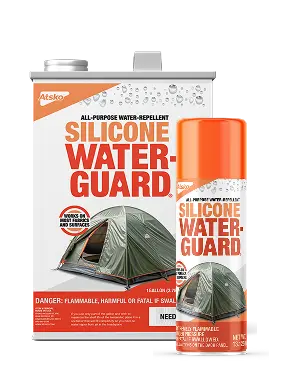
Silicone Water-Guard is the greenest, most effective heavy-duty water repellent at any price. You get ? more product in every can because we don’t use 40% Propane/Isobutane fuel gas as a cheap heavy propellant to fill the can. Our propellant is < 3 grams of reclaimed CO2. Less effective formulas require 2 applications. With Silicone Water-Guard you get maximum repellency in a single application and because you have 60% more usable product there’s over 3 times as much value in our product and it usually sells for less than the competition. When you put 3 times the value in the same packaging, and reduce danger and VOC’s you have the greenest product in its category.

Sport-Wash Detergent is greener from cradle to grave.

When a few grams of vegetable based renewable surfactant can restore a costly high tech garment to it’s original condition and you consider shopping more fun than doing, it is a total waste to replace a garment that represents fossil fuel in feed stock material, manufacturing, shipping, shopping, etc. By washing away the contaminates of use and the residue of inferior cleaners, Sport-Wash restores appearance, hand, repellency, wicking, breathability, elasticity and rapid drying.

Sport-Wash cleans an entire wash load of clothes with a single ounce of product, less than 29 grams. The savings each year in packaging and transportation if all laundry were done in Sport-Wash, would be multiple supertankers of oil. Over 24 grams is pure water so you are restoring the entire load of clothes with less than 5 grains of chemical. And the chemical, a straight chain molecule derived from coconut, is “readily biodegradable”. So biodegradable that it actually helps septic tanks function better, and represents only 11% of the load of other detergents when processed by typical municipal water treatment plants. Of course Sport-Wash is completely phosphate-free so it doesn’t contribute to algae growth. It functions in unheated water saving additional fuel. It is safe to use as a pre soak for spots and stains, eliminates the need for fabric softener with it’s irritating, performance robbing residue, because when fibers are clean, they slip freely against each other, so there is never stiffness or scratchiness. If you experience rash and irritation in warm moist areas, residue-free Sport-Wash will eliminate these problems, saving trips to the doctor and prescriptions for more chemical exposure.

If you know of another way to measure greenness, efficiency and savings, apply it to Sport-Wash and you will see again the superior greenness of doing so much more with so much less.

Repair-All by Sno-Seal

Repair-All by Sno-Seal is a unique product. Three special properties make it superior for sealing welts, seams, and stitching of footwear and repairing and patching waders tents and rubber boats. First, its ability to remain flexible, second its ability to fail cohesively rather than adhesively, and finally its ability to re-soften and adhere to previous applications of itself.

How it works:
When applied to clean materials the solvents in Repair-All attack the surface and actually bond into it. This bond (adhesion) is stronger than the Repair-All is itself (cohesion). This means that when Repair-All bonds two pieces of material together, the bond to each material is stronger and will remain intact after the bead of Repair-All has failed and split. This is important because if the bond failed the material being repaired would be damaged making further repair impossible. If a Repair-All repair fails, you simply apply a fresh bead directly on the old repair. The solvent in the new material re-softens and rejoins the old material (which is still bonded) and your repair is once again complete.

Repair-All can protect welts, stitching and seams from other damage too. Welders often burn the stitching of boots, gloves, and aprons with weld splatter or contact to hot surfaces. This causes even brand new protective gear to “fall apart”. A bead of Repair-All on exposed stitching will prevent this damage. The stitching can not be damaged until the Repair-All has first been burned. Frequent inspections and touch-up of the protective Repair-All will eliminate this kind of damage to boots and other protective gear worn by welders.

Repair-All forms butterscotch colored seal of nitrile rubber adhesive. It cures in 12-48 hours and remains flexible. Repair-All is excellent for repair of rainwear, waders, wetsuits, rubber boots. It resists weather, water, chlorine, oil, gas, diesel, blood and most cleaners and solvents except acetone and M.E.K. Repair-All will repair most vinyl, rubber and plastic toys and sporting goods including pool equipment, covers, and accessories.

Shelf life is at least three years in the recyclable aluminum tube. Excessive heat (over 100 degrees) during storage may expand Repair-All forcing the tube to leak. For maximum life, store between 60 degrees and 80 degrees and squeeze air from tube (tip up) before capping tightly.

Miners of coal and other minerals, persons who work concrete, and sand blasters experience early failure of stitching because of damage caused by abrasive particles. This can be prevented by a thin coating of Repair-All applied on the stitching and seams, sealing out even the smallest particles.

There are numerous non-footwear applications for Repair-All. Cracks, seams, holes, and wear spots on rubber, plastic and canvas items can be repaired easily with Repair-All. Rain wear, waders, tents, boats, door and window hardware and other items often require a strong flexible bond. The Repair-All tube is an excellent way to apply a flexible contact adhesive to a small or delicate repair. Rigid materials may also need a flexible adhesive if they have different expansion rates and are exposed to temperature variations.

Warning:
Repair-All contains acetone solvent. Always test first to be sure it will not destroy the material you wish to repair. To speed drying and cure, a joint can be coated, pressed closed, and then opened for a minute of air dry before final assembly. Always use adequate ventilation. Avoid contact with Repair-All. Abuse of solvent vapor can result in death. (Repair-All contains non-photo-chemically reactive solvent, southern California APCD rule (1-9-76).

Directions
For best adhesion, surface must be clean dry and free of dust or wax. If the shoe will be treated with Sno-Seal, Repair-All should be applied first because it is difficult to remove Sno-Seal from leather. Sno-Seal can be cleaned easily from an existing bead of Welt-Seal with mild solvent when reapplication of Repair-All is needed. Temperature of Repair-All and surfaces should be between 65° and 80°F.

Application
Apply a thin layer, flowing Repair-All by gravity over all the areas to be covered. It can be spread with disposable or easy to clean tools but tends to form strings until skinned over. Do not “pump” tube as this will create bubbles of trapped air. Excessive thickness or heat while curing will also create bubbles. Small bubbles will not reduce the effectiveness of Repair-All.

Very absorbent materials may require more than one coat. Two thin coats is always preferred to one thick coat and will reduce running. Treat one side of a boot and set it down to skin over while you treat one side of the other boot. In less than one minute, Repair-All will skin over and you can treat the other side of the first boot.

Thank you for choosing Repair-All. Please consider our other Sno-Seal products. All are designed to make your footwear, clothing, and gear work better and last longer. Our efficient and economical products help you conserve and enjoy our world.

Danger: Extremely Flammable
The vapors of this product are easily ignited. Contains acetone. Precautions; keep product and its vapors away from heat, sparks and open flame. Use only in areas adequately ventilated with enough air movement to remove vapors and prevent vapor build-up. Avoid prolonged breathing of vapor. Avoid eye contact. Avoid prolonged or repeated contact with skin. Keep container closed when not in use. Keep out of reach of children. Suggested first aid: immediately flush eyes with water for 10 minutes and call a physician.